Thursday, October 9, 2008

Top Ten Ways to Make the Financial Crisis More Fun

The market dropped yet again today. At 4:00 p.m. today we were down to 8579. Ouch. The credit markets don't seem to be budging, despite the Federal Reserve's efforts.

Letterman's Top Ten Ways to Make the Financial Crisis More Fun might make you laugh for a moment, though.
<

— JSM

Greed is good . . . well maybe not always

Greed. I am reminded during this financial crisis of the movie Wall Street and Gordon Gecko's famous scene where he observes that "greed is good."

.

Well, I don't think Michael Douglas was talking about our current financial crisis. And, in that scene, Gordon Gecko also makes a number of other important observations about companies and about the United States economy as a whole. He also accuses company officials of creating a establishment that rewards the "survival of the unfittest" and contrasts that with his philosophy that you must "do it right or get eliminated."

All of this raises the issues of who really is to blame here. That is, who is unfit and should be eliminated. Christine Hurt over at the Conglomerate explained that this is really a hard question to answer, not one that lends itself readily to soundbites and that there may not even be any "bad guys" after all. Or, the villain of my War of Wealth variety simply does not exist. I found this video:


This guy seems to blame all of this mess on the Republicans, particularly President Bush and Senator John McCain.

I, like Christine Hurt, do not think it is that easy to throw a large net over this one and just put folks in jail. Of course, that was until I found out that the AIG executives apparently spent $440,000 to stay at the St. Regis Resort in California after the government lent it money to bail out the company. Although those in attendance did not apparently include the particular executives from the AIG divisions that are in trouble, it seems like a lot of money for any executives to spend during an economic crisis. Reckless, but I am not sure illegal. Perhaps someone will get fired over the resort extravaganza, but jail? Doesn't seem likely. Well, apparently there are indications that some AIG executives might have hid the full extent of the financial problems from its auditors as the losses mounted. Now, we are onto something that might lead to jail time.

— JSM

Who's LIBOR?

Photo by AMagill

One small silver lining of this crisis is that lots of terms with which I struggle with commercial law students are now splashed all over the front pages of financial and general news outlets. Perhaps the most important example is LIBOR.

The London Interbank Offered Rate is the interest rate at which a series of 16 banks are willing to lend to each other--overnight or for various longer intervals, like 3 months, and in a variety of currencies, most prominently U.S. Dollars and Euros. Bloomberg today has one of the clearest and most insightful discussions of LIBOR, its history, and the various ways it is being used to gauge the seize-up in the credit markets. Gavin Finch and Ben Sills offer a particularly lucid explanation of why the TED spread is a stark indication of how much banks distrust each other (or at least their ability to repay loans) and how that spread has really increased recently (spiking to levels far above what we saw in the 1987 crash and after the collapse of LTCM in 1998). The scariest passage:

Central bank efforts to tame Libor have had little impact because instead of lending the extra cash, banks are holding it on deposit with the ECB at a loss. [empahasis added] On Oct. 6, banks borrowed 13.6 billion euros from the [European Central Bank] at ... 5.25 percent. At the same time, they deposited 42.6 billion euros overnight at 3.25 percent.

This is just crazy! Can anyone say "irrational pessimism" (or, I guess, "negative/reverse arbitrage")? I hope these banks soon begin listening to Jean-Claude Trichet's exhortation for everyone to "keep their composure" and start acting like market players again.

Anyway, for those of us in the education industry, LIBOR is likely more important to our students than we might have realized. Many private student loans are pegged to 3-month U.S. Dollar LIBOR, and if these loans readjust before that index returns to "normal" levels, our students might face a crushing increase in current or expected student loan interest payments (much like poor Maureen McNally, mentioned in the Bloomberg story, whose LIBOR-pegged mortgage payments have jumped 50%, not to mention Danilo Coronacion, who oversees a $60 million debt with interest pegged to LIBOR).

At least overnight LIBOR rates (both $ and €) fell last night, so let's hope this trend continues and spreads to the longer maturities (especially the all-important 3-month rates).

Update: Further confirmation that LIBOR is the bellwether:

"Everyone's watching the Libor, looking for the credit market to thaw and it's not there yet,'' said Alec Young, a New York-based equity strategist at Standard & Poor's. "Until you get some convincing thawing in the credit markets, the threat of a global recession and a global profits recession remains and it's going to be difficult for stocks to build momentum.''

Wednesday, October 8, 2008

Ben Bernanke Oct. 7 Remarks

Ben Bernanke addressed the National Association of Business Economics about current economic conditions. Not surprisingly, Bernanke commented that the "financial systems in the United States and in much of the rest of the world are under extraordinary stress, particularly the credit and money markets." We can hope that Bernanke is correct that the bold actions of the government will have the effect of restoring confidence in the markets.


— JSM

Contracts in Crises: Excuse Doctrine and Retrospective Government Acts

The most comprehensive analysis of the effect of government acts on performance of pre-existing contracts is found in the writings of Professor Richard Speidel. He referred to the problem as “retrospective” government acts, rather than “retroactive” to describe the legal consequences of acts that: “(1) impair certainty and stability by unsettling reasonable expectations and investments; (2) undermine the legitimacy of a justice system through seemingly arbitrary results; and (3) unexpectedly shift a public burden to a specific group who did not cause the underlying problem.” Professor Speidel argued that it is easier to obtain excuse for retrospective government acts where the act makes the contract either unenforceable or would result in direct governmental sanctions on the party performing because presumptions that the law will not change operate to satisfy the foreseeability element of excuse.

To make his point, Professor Speidel used the example of homeowners that have five year fixed price contracts for gas supply at $3 per BTU. After hurricanes disrupt the gas supply in the area, the market price of gas is $6 per BTU. The government, in an effort to bailout the suppliers, deletes the fixed price term out of the consumer contracts in the area. Professor Speidel argued that the occurrence of the hurricane in all likelihood did not make performance excusable due to the fixed price nature of the contracts. The supplier is excused nevertheless due to the government act. Thus, the consumer must pay the higher market price for the gas supply.

Explaining this outcome, Professor Speidel turns to U.C.C. § 2-615 and notes that the foreseeability factor is satisfied in the government act cases under the direct language of the Code, leaving only the impracticability component of the test, unless issues of risk allocation are present. Comment 10, though, explains that “governmental interference cannot excuse unless it truly ‘supervenes’ in such a manner as to be beyond the seller’s assumption of risk.” The Comments to the Restatement further explain:
With the trend toward greater governmental regulation, however, parties are increasingly aware of such risks, and a party may undertake a duty that is not discharged by such supervening governmental actions, as where governmental approval is required for his performance and he assumes the risk that approval will be denied. Such an agreement is usually interpreted as one to pay damages if performance is prevented rather than one to render a performance in violation of law.

Speidel's concern with the use of ordinary contract principles to allocate the risk of retrospective government acts helped shape my recent paper on Impracticability Under the U.C.C. for Wartime Contracts. Although Justice Souter noted in United States v. Winstar Corporation case the humdrum nature of basic procurement contracts, wartime sales contracts in Iraq have turned out to be less than routine due to the hazards created by insurgents. I have argued that the strict application of traditional doctrine must proceed with caution regarding wartime contracts as they arguably exhibit the same differential in bargaining power noted by Professor Speidel. As such, the traditional rules are applicable to wartime contracts as they are to regulatory ones, but one must exercise care in the allocation of risks. Not surprisingly, Professor Speidel’s proposition is consistent with the comments to the Code, directing reference to equitable principles where excuse or no excuse does not lead to a satisfactory result. U.C.C. § 2‑615 cmt. 6 (2001). Although Professor Speidel's work did not answer, nor was it intended by him to answer, the specific issues raised by extreme personal hazards faced by contractors during wartime, his words guided my thought process. Although I did not personally know Richard Speidel, his work has influenced my own. I would guess that there are many who share my perspective on the impact of Dick Speidel's work.

— JSM

The War of Wealth

The War of Wealth was Charles T. Dazey's broadway melodrama about a banker whose junior partner's speculation has threatened the very existence of the bank. The hero is released after an explosion from a bank vault where the villain has locked him and the express wagon arrives just in time to stop a run on the bank. All ends happily for the bank and the characters.

The War of Wealth was inspired by the Panic of 1893, which led to the "Long Depression." from 1873-1896. The panic was caused by a number of business failures and shaky financing which set off a series of bank failures. Sound familiar? As the state of the economy worsened, people withdrew their money from banks, causing runs. A credit crunch ensued. More than 15,000 companies and 500 banks failed during the crisis. Unemployment was high. Perhaps like Dazey's War of Wealth, a hero eventually arrives in the form of President McKinley and the Klondike gold rush. The economy plugs on for ten years of fast growth.

As Jason Kilborn reported, Congress approved the recent financial bailout. Yet, stocks were down to about 9605 at 2:30 p.m. today. Thinking about the numbers. The U.S. government has agreed to spend up to $700 billion. Washington Mutual Bank and Wachovia had about $1 trillion in assets together. Of course, we don't know how much of these assets are "troubled." We also don't know how many assets belonging to other banks are troubled and exactly which banks are on the FDIC's watch list. Bauer Financial Inc. gives banks "star" ratings based on information filed with the FDIC, with today's ratings being based on the June 30, 2008 filings. Wachovia Bank received a 3 Star rating for "adequate." Much has changed since mid-summer.

Last week, commenting on the proposed merger of Wachovia and Citigroup Inc., FDIC Chairman Sheila Blair commented:
"[o]n the whole, the commercial banking system in the United States remains well capitalized. This morning's decision was made under extraordinary circumstances with significant consultation among the regulators and Treasury."
Federal Reserve Chair Ben Bernanke was more cautious in his comments about the bailout, saying:
"I applaud the action taken by the Congress. It demonstrates the government's commitment to do what it takes to support and strengthen our economy. The legislation is a critical step toward stabilizing our financial markets and ensuring an uninterrupted flow of credit to households and businesses."
The Fed announced today that it will now pay interest on bank's required and excess reserve balances in an effort to encourage term lending. We'll have to wait and see what else develops as the government tries to stabilize markets.

I have my doubts about whether the bailout package will change things quickly toward greater stability. Like in 1893, there is a lot here to say about confidence in the markets. If today's market is any indicator, we (and banks) may be in for a rough ride. Andrew Gray, the Director of the Office of Public Affairs at the FDIC recently reminded us to "remember, no depositor has ever lost a penny of insured deposits, and never will." Consumers may lose elsewhere, but let's hope that Gray is correct on this small bit of good news. Not quite the hero of the War of Wealth variety, but it might have to do.

— JSM

Tuesday, October 7, 2008

Renewed Interest in "Commercial Paper"!

Photo by friendofdurutti

Finally, the sexy topic of commercial paper has made it onto the front page of the Wall Street Journal! No more hemming and hawing when our students ask for examples of commercial paper--here it is.

Ordinary people no longer use promissory notes as a payment/value device, endorsing notes from payee to payee (as used to be the case in the U.S. and elsewhere). Indeed, I doubt that most ordinary people ever put an endorsement on a check other than the restrictive "for deposit only." The whole notion of commercial paper and negotiation thus seems so artificial to our students, and I've had a hard time convincing myself that teaching the odd intricacies of this system is worth the effort (setting aside the bar examiners' idiotic continuation of testing on this anachronistic material).

Now, the main modern use of the term "commercial paper" has been thrust onto the public stage. Rather than taking short-term loans at the Prime Rate (5.0% or more currently) from a bank, large companies borrow from investors, like money market funds, by issuing promissory notes in exchange for loans, usually payable in 9 months or less, at rates much closer to the Fed's 2.0% target lending rate (thought rates have been elevated, in the 3.0% range, for nearly a month). While the investing market was awash in liquidity, this was a cheaper way to fund operations, leverage results, and have every last penny of a company's capital working at all times. When Reserve Primary Fund " broke the buck" on September 16 by admitting that losses on investments in Lehman Brothers (probably largely in its commerical paper) caused the value of its assets to fall below $1 for every $1 invested in the money market fund, public confidence in the stability and safety of money market funds was rattled, and other money market funds faced something close to a run on the bank as investors yanked money out. The commercial paper market dried up, as the primary investors in the market hoarded cash instead of investing in short-term loans to business, no matter how stable the borrower, because loans of longer than overnight would jeopardize the funds' ability to make funds available to investors who sought withdrawals--besides, who knew which company would be the next to make an ugly announcement about its financial stability and default on its short-term commercial paper loans. Again, in rides the Fed on its white horse, offering to buy commercial paper directly from companies and supply liquidity to this crucial corner of the market. What unprecedented move will we see next from the U.S. Treasury?!

Back to the classroom, though, I wonder if this "commercial paper" (1) actually satisfies the conditions for negotiability in Article 3, (2) actually changes hands more than once, from maker to payee, and (3) whether anyone in the system really cares, as these short-term loans are likely never subject to any payment dispute for which the maker-liability and holder-in-due-course rules would be relevant (they're enforceable payment contracts one way or another, one would think). Anyone have any direct knowledge on any of these points? My bet is that this paper (like the notes associated with home mortgage loans) is generally festooned with caveats and other requirements that violate the "extraneous undertaking" restriction in Article 3, removing the entire affair from the realm of negotiable instruments law. This makes me wonder whether we're really on a fool's errand in continuing to harp on these rules in Payment Systems, Commercial Paper, or whatever else the course might be called elsewhere.

Anyway, the fact that something called commercial paper has grabbed the headlines today makes me feel pretty cool in any event. Thanks, Ben and Hank!

Monday, October 6, 2008

Dick Speidel Mob-blog: Robert A. Hillman post

Dick Speidel was no ordinary law professor. He was one of the giants in the field of contract and commercial law for over four decades and a respected, important leader in legal education and law reform. Tributes to this effect have already poured in to the contracts listerve, this blog, and elsewhere and there is no need to repeat the obvious. What set Dick apart, in addition to his professional accomplishments, was his humility, sense of humor, and perhaps most important his generosity. As for the latter, Dick was eager to nurture beginners whether they were members of his faculty or another. I never had the good fortune to be on the same faculty with Dick, but he was always willing to read my drafts, offer suggestions, and generally to offer encouragement. In fact, Dick often sent supportive messages just when I needed them the most. For example, when a not-so-favorable review of one of my books appeared, out of the blue Dick sent a message of support. Dick helped out in other ways. When our planning committee for the Montreal AALS
contracts conference sought a leader to give a keynote address, we didn't hesitate to ask Dick. And he didn't disappoint. His address tracing many of the modern issues of contract law was thoughtful, poignant, and educational.

In short, Dick was a mentor, friend and supporter. And what is most impressive, our large family of contract and commercial law scholars can all say the same thing about Dick.

Friday, October 3, 2008

Hooray!!! Congress To The Rescue At Last!

Photo by DownTown Pictures

Thank goodness, the rescue/bailout bill has passed!!!

Now let's keep our eyes on the overnight and short-term money markets (especially the availability of longer-term "commercial paper") for some signs of relaxation, though this likely will not happen immediately (though see here for some early indications of a possible thaw). And let us not forget the 159,000 people who lost their jobs in September. The financial crisis may be on the wane, but the growing economic crisis remains. Let's hope relief from the former boosts relief to the latter.

Thursday, October 2, 2008

The Dow, Credit Markets, and the Real Source of Danger

Photo by Josh Sommers

It feels good when smart people confirm that you're looking in the right place for answers. A propos of my post yesterday, a CNN story this afternoon explains the fall in the Dow today in terms of fears about more woes about tightening credit. The source is revealed!

The following observations are the most salient, and I can't improve upon CNN's clear explanation, so I'll quote it here (with a hat tip to Alexandra Twin, CNNmoney senior writer):

Several measures of bank nervousness hit record levels Wednesday, with banks still wary despite the prospect of the bailout gaining passage.

"What all these measures are telling us is that banks aren't willing to lend to anyone," said [Ron] Kiddoo [chief investment officer at Cozad Asset Management]. "It shows you that the credit crunch is spreading to Main Street."

The 3-month Libor--the rate banks charge each other to borrow for three months--rose to 4.21% from 4.15% Wednesday, a more than 9-month high, according to Bloomberg.

The difference between the 3-month Libor and the Overnight Index Swaps rallied to an all-time high of 2.6%. The Libor-OIS spread measures how much cash is available for lending between banks and is used by banks to determine rates. The bigger the spread, the less cash is available.

The TED spread, which is the difference between 3-month Libor and what the Treasury pays for a 3-month loan, briefly hit an all-time high of 3.61%, before pulling back a bit.

When banks are relatively confident, they charge each other rates that aren't much higher than the U.S. government. When the spread widens, that indicates increased jitters.

Once again, I certainly hope (a) the House Republicans put ideology aside, get on board with their Senate colleagues, and pass the rescue bill, and (b) Treasury's actions pursuant to the new authority quickly dispel the "jitters" that the credit markets are suffering.

By the way, Ted Seto's brilliantly concise explanation of the roots of and solutions for this crisis are a must read (hat tip to Paul Caron). Thank goodness for really smart people like Ted who generously guide the rest of us to an understanding of these complex issues!

Update: For an even better story on this issue, see here (thanks again to CNN and David Goldman!).

Update no. 2 (10/3/08): And things just keep getting worse, despite anticipation of House passage of the rescue bill this afternoon, according to the latest from CNN Money and David Goldman:

The 3-month Libor rate . . . rose to 4.33%, up from 4.21% on Thursday, its highest level since January. . . .
The difference between that measure and the Overnight Index Swaps rate rose to an all-time record 2.73 percentage points, up from 2.55 points Thursday, according to data reported by Bloomberg.com. . . . Friday marked the sixth-straight record for the indicator, showing that banks are hoarding cash rather than lending to one another.


Historically, the typical Libor-OIS spread is about 0.11 percentage points, but it has averaged 1.66 points since the crisis began on Wall Street in mid-September, according to Merrill Lynch economist Drew Matus.

Another credit market indicator, the "TED spread," rose to yet another record high of 3.68 percentage points. The higher the spread, the more likely banks are to avoid risk. The TED spread was only 1.04 points on Sept. 5.

Wednesday, October 1, 2008

Dick Speidel Mob-blog: Peter Linzer post

The AALS Meeting is in San Diego, where Dick lived in his last years. I believe he lived on or near Coronado Island, and I know he was fond of the famous "Hotel Del," the Hotel del Coronado, which was used in Some Like It Hot, and many other movies as the epitome of a classy hotel. I propose that we all meet at the Del at sunset and have drinks on the terrace and swap happy stories about Dick. It's possible that the AALS will have the sense to have the annual reception at the Del, and if it does, we could maybe combine the two events, but if not, it would be fun to go out to the Del at sixish to pay tribute to Dick in a happy way that I think he would have liked.

- Pete Linzer

Dick Speidel Mob-blog: Steve Ware post

When I was relatively new to law teaching, I found Dick to be very generous and helpful to a wide variety of young scholars. And then in the last few years, I had the opportunity to co-author a book with Dick (and two other authors). During the entire book-writing process, I learned from his wisdom and enjoyed his good nature. I will miss him as a teacher, a scholar and a person.

- Steve

How Will We Know If a Bailout Has Succeeded?

Photo by coda

I've been looking in the wrong places for indications of improvements in our current financial mess. The Dow is not a good indicator because it only indirectly reflects the real problem: uncertainty as to the value of mortgages and MBS held by banks and other investors, and the effect of that uncertainty on lending markets. What we should be looking for is a sustained improvement at the source--lending markets themselves. When liqudity begins to flow again, beginning with bank-to-bank lending, then prime corporate lending, then small business and consumer lending, hopefully on more realistic and careful terms than before, we'll have a good indicator that we've succeeded (it seems to me).

These markets get much less press than the simple Dow Jones Industrial Average and are generally more difficult to understand, particularly with all the high-flying jargon that bond and money market traders use to express their ultra-cool and sophisticated understanding of finance. John Jansen's bond market blog is a great example of an extremely insightful and helpful source for this info that uses language so opaque as to barely qualify as communication (at least for non-cognoscenti like me). Thanks to a mention from Jonah Gelbach on Prawfsblawg, which led to a comment by Felix Salmon on Portfolio.com, I found Jansen's cut-to-the-quick blog, which despite its difficult language offers the info we really need to gauge a recovery/success.

Contrary to the comforting news on the Dow from Wall Street yesterday, lending markets are still seized up, and things don't appear to be getting much better. We should care that equity traders believe the bailout will succeed, but only because this indirectly suggests that they believe that lending will loosen up, financing for business will return, and the economy will get back on track rather than grinding to a painful halt with repercussions all the way down to Main Street.

Better to go to the source, it seems to me. What do banks (lenders) think? The news on that front yesterday was nothing short of terrifying. The London Interbank Offered Rate (LIBOR) for overnight dollar loans climbed on Tuesday to a record 6.88%. This is the rate that banks charge each other to lend money (overnight)--if a bank has to pay nearly 7% to get a loan, imagine what a corporation, let alone an individual would have to pay to cajole a loan out of these banks! Luckily, the huge spike on Tuesday (the last day of the third quarter) was largely a result of artificial funding constraints caused by the final day of the quarter, and the rate fell over 3% (!) the next day to 3.79%. This is stomach-churning volatility! Money markets that normally hover within half a point of the Federal Funds rate (2.0%) opened at more than triple that figure, between 6.5% and 7% on Tuesday. The lending markets are not as sanguine about the proposed bailout or economic fundamentals as Wall Street traders apparently are.

When the volatility and scary inflated rates in these markets settle down, we'll be able to breathe more easily. The Dow's ups and downs are not a great gauge, it seems, when the real problem is a lack of liquidity (caused in large part by a lack of certainty with respect to mortgage and MBS value). Find the source of the liquid, and see if the faucet has turned on. Only when banks get comfortable lending to each other again can we have any hope of a sustained recovery. What John Q Public needs to understand in evaluating the "bailout" is that its purpose (I believe and hope) is to offer banks certainty with respect to the value of mortgages and MBS, and therefore comfort to turn on the lending faucet. This is a liquidity recovery program--"bailout" is an inaccurate label and, it turns out, very poor choice of wording for political purposes!

I don't know if the Paulson plan will produce this result, but I now feel more comfortable about where to look to find out if it was successful.

Tuesday, September 30, 2008

Credit Card Holders Bill of Rights


In the midst of all the bailout activity, the House passed the Credit Cardholders' Bill of Rights Act of 2008 with virtually unanimous support from Democrats and 84 Republican votes. Although passage of the bill in the Senate was always iffy, and is now extremely unlikely, the new Congress is likely to revisit these issues.

The "Bill of Rights" title might lead one to think that the bill incorporated a short list of broad principles. In fact, it addresses a number of specific issues in a particularized and technical way. What follows is a summary of the main provisions:

1. Card issuers would be prohibited from increasing the interest rate on existing balances, unless (a) the rate is tied to a publicly available index that is not under the issuer's control; (b) the increase is the result of (i) the expiration or loss of a promotion rate for a reason that was disclosed in an account agreement; or (ii) the cardholder's failure to make the minimum payment more than 30 days past the due date.

2. Issuers would be required to permit cardholders with existing balances at the time of a rate increase to amortize the existing balance over at least a 5-year period and the percentage of the existing balance that was included in the required minimum payment cannot be more than doubled.

3. Rate increases would require 45 days notice, must be complete and conspicuous, and explain the extent to which they apply to an existing balance.

4. Double cycle billing would be prohibited.

5. Where a cardholder fully pays a balance and only interest accrues during the billing period, the bill would prohibit (a) any fee in connection with the interest-only balance and (b) the issuer from treating a failure to make timely payment as a default. The cardholder would remain responsible for paying the interest.

6. Issuers would be prohibited from furnishing information to a consumer reporting agency until the card is used or activated, except that the issuer may furnish information about any application for a credit card account.

7. Issuers would be required to treat any payment received, or transferred by wire over a web-based or telephone system, by 5PM on the due date as timely. A receipt showing that the payment was mailed not less than 7 days before the due date would also constitute presumptive payment by the due date, unless the issue shows fraud or dishonesty on the part of the cardholder with respect to the mailing date.

8. Where an account has multiple interest rates, the bill would require that the issuer allocate payment among the outstanding balances in the same proportion as each such balance bears to the total outstanding balance. Issuers would be permitted to allocate a higher percentage to higher interest rate balances, but they would be prohibited from engaging in the now common practice of allocating the entire payment to the lowest rate balance.

9. If an account includes a grace period, cardholders taking advantage of promotional offers could not be denied the benefit of the grace period.

10. Issuers would be required to offer cardholders the option to elect not to permit the bank to authorize an over-the-limit charge and thereby avoid fees for going over the limit. Issuers would be permitted to authorize charges going over the limit by a small amount, but they could not charge a fee.

11. Over-the-limit fees could be charged only once during a billing cycle.

12. Additional information would be collected on rates and fees.

13. Issuers would be prohibited from financing up front fees in excess of 25% of the credit authorized on the account.

14. Credit cards could not be issued to anyone under 18 unless emancipated under state law. A signed application indicating that the applicant is 18 would protect the issuer.

The provisions in the bill resemble those proposed by the FED last May, which have generated a record 56,000 comments. Some opponents of the bill, including the White House, contend that regulators are better equipped to deal with these sorts of issues. Proponents contended that controls on the credit card industry require the force of legislation.
The industry, not surprisingly, came out strongly against the bill. A statement from the American Bankers Association argued that the provisions in the bill would limit the banks ability to manage risk and therefore raise prices and restrict the availability of credit to consumers and businesses.

The bill would not address the issue of merchant credit card acceptance fees that are currently being challenged in a nationwide class action. In August, the House Judiciary Committee reported a bill dealing with merchant fees, and the new Congress is likely to take up that issue.

Saturday, September 27, 2008

Blog-Symposium Honoring Richard E. Speidel (1933-2008)

The Commercial Law Blog is sponsoring a commercial law tribute to Richard Speidel during the month of October. Accordingly, we are pleased to announce a "mini" blog-symposium (or "mob-blog") to honor him and his work. This mob-blog is open to all in terms of participation and we hope that many will participate with a posting. We especially hope that some of Dick's colleagues and collaborators will participate in this venture. All those wishing to post simply should send an email at jenni.martin@louisville.edu to receive guest access rights to post on the blog.
We hope that this forum will serve as a memorial of kinds to his work.

— JSM

Thursday, September 25, 2008

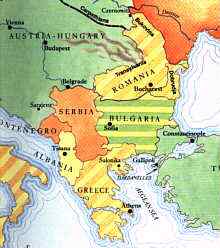
Some Damn Foolish Thing in the Balkans

That's what Bismark predicted would set off the war that seemed inevitable. The trigger turned out to be the assasination of Archduke Franz Ferdinand, heir to the Hapsburg throne. The assassins were seven young men. All were members of a secret Serbian nationalist movement. All had tuberculosis which was a death sentence in 1914. The rest, as they say, is history.

Two days ago, at a Brookings Institute conference on Turmoil in Housing and Financial Markets, former Treasury Secretary Lawrence Summers (now at Harvard's Kennedy School) observed that there is no single root cause of the current financial crisis and no simple single solution. The fix, he said, requires "multiple instruments targeted to multiple objectives." One response to the housing crisis currently getting most of the attention is to regulate institutions so they won't make mistakes again. People and businesses make mistakes and they always will, whether government regulates them or not. Summers offered another approach --reforming the financial system to make it safe for institutions to fail. The goal should be reduction of systemic not individual risk of failure.

Summers noted that even without subprime mortgages, the US economy was still vulnerable to leverage bubbles and might still have found itself in crisis. Blaming the current financial crisis on submprime mortgages, he said, is like blaming World War I on the assassination at Sarajevo.

Wednesday, September 24, 2008

Impossibility Doctrine Under CISG 79

Thanks to Meredith Miller over at ContractsProf Blog for pointing out the case of Hilaturas Miel S.L. v. Republic of Iraq, --- F.Supp.2d ----, 2008 WL 4029713 (S.D.N.Y. 2008). Before the Iraqi War, Hilaturas Miel S.L. (“Hilaturas”), a Spanish company, agreed to sell yarn to the Republic of Iraq ("Iraq")under the U.N. Oil For Food Program ("OFFP"). The OFFP provided letters of credit to beneficiaries (sellers), but required independent inspection of goods when received on the ground in Iraq. When the fighting broke out, the approved United Nations independent inspectors left the country, so that there was no one to inspect the Hilaturas yarn. Shortly thereafter, the government of Iraq ceased to function. Still later, the letter of credit for the Hilaturas yarn expired. Hilaturas sold the yarn at a loss and sued for its damages.

The Southern District of New York (Sweet, J.) decided the case, Hilaturas having brought suit under the Foreign Sovereign Immunities Act. The Court granted Iraq's motion for summary judgment. Applying CISG Article 79, the court concluded that the since the contract required inspection, the withdrawl of the inspectors created an impossibility of performance. That is, payment for the yarn under the letter of credit could only be made after presentation of the required documents, including the inspector's report.

The Court, in an interesting twist, remarks that United States courts often look to analygous provisisions in the U.C.C. to resolve issues arising under the CISG. The Court goes on to conclude that UCC 2-614 on substituted performance due to impracticability of delivery or payment is such a provision. Important to the Court, the official comment explains that “a reasonable substituted performance tendered by either party should excuse that party from strict compliance with the contract terms which do not go to the essence of the agreement.”

Hilaturas argued that Iraq should have provided an alternative means of performance. That would seem to be an alterative inspection procedure or simply waiving that provision of the letter of credit. Of course, it is doubtful that alternative inspection as acceptable to the United Nations, so that payment under the OFFP letter of credit would not have been forthcoming. In the end, the inability to have the goods inspected during the letter of credit period results in performance being impossible.

CISG 79 only allows parties to excuse performance for certain impediments, namely ones beyond their control. The Court clearly dodges the lurking issue particularly in CISG 79 regarding whether the inspection impediment was "beyond the control" of Iraq and whether it could have "avoided or overcome it or its consequences." The issue is tricky since the former Governmet of Iraq no longer exists in a way to make it accountable for the breach of contract or the creation of the impediment. Hilaturas has a point that Iraq,not it, should have found a substituted performance. I am not as convinced as the Court that all of this mess was "unforeseen." Nevertheless, the Court seems right in the end here as both parties knew they were operating under the OFFP restrictions, which made the inspection provision part of the "essence" of the contract as anticipated by UCC 2-614 cmt. 1.

— JSM

Tuesday, September 23, 2008

If You Follow Only One Issue In This Bailout . . .

Photo by stopnlook

Amid all the noise about limits on executive comp and other distractor issues, one central important issue stands out, in my view, as the most worthy of attention as Congress and the Fed wrestle over the terms of the proposed bailout: How much will Treasury pay for the mortgage-related assets/securities it proposes to unload from troubled banks? Put more pointedly, how much of a discount will the Fed impose on the supposed value of these asset to try to find a baseline from which the market can rebound? To (1) put the pain on the too-clever folks who caused this financial mess in the first place, (2) avoid the Fed taking on assets that will continue to fall in value and produce losses for all of us taxpayers, and (3) put the Feds in a position of maximum maneuverability to modify the mortgage assets they buy, we would like to see sales at a significant discount from "nominal" or "book" or whatever other misleading "value" the banks had previously put on these things. Of course, we don't want to exacerbate the crisis by forcing banks to destroy the asset side of their balance sheets and further seize up credit markets, either, but I don't get the sense that this is a significant danger (yet).

We haven't heard much on this big question, but early indications are mixed. Bernanke and Paulson today reiterated that some sort of reverse auction might be the best way to go; that is, have the banks compete to offer the lowest sales price, and the low bidder gets the toxic assets off its books, to be replaced by crisp, relatively-clear-value U.S. greenbacks. My sense is that this structure would serve the concerns mentioned above and produce an acceptable result for most reasonable-minded observers. On the other hand, another report out today suggest that Treasury is less sanguine about an auction, fearing that banks might compete too aggressively with each other to drive down prices to deeply depressed "fire sale" levels. This latter report interprets Paulson's comments as suggesting that Treasury intends to pay something closer to undiscounted long-term value ("hold-to-maturity") as opposed to current distressed value for the bad mortgage-related assets. This would, of course, raise the risk level for a big loss by Treasury and pose a serious threat to the value of the U.S. dollar.

We should all watch quite closely as Treasury reveals (one would hope soon) which of these valuation/auction methods it intends to pursue if the bailout proposal makes its way through Congress. In my view, the evaluation of the entire bailout rests on the resolution of this issue.

Monday, September 22, 2008

The $700 billion mystery

Here in Louisville last week, many were making their way through the week without electric and other utility services. At my home, it thankfully was only the Internet and cable down. A big week to be slow on getting speedy financial news updates. At this same time, with the Washington, D.C. wrangling on-going, Congress, Treasury and the Federal Reserve are scrambling to bailout the financial industry. Treasury Secretary Paulson commented on Friday:

"Right now, our focus is restoring the strength of our financial system so it can again finance economic growth. The financial security of all Americans – their retirement savings, their home values, their ability to borrow for college, and the opportunities for more and higher-paying jobs – depends on our ability to restore our financial institutions to a sound footing."
Waiving the five day waiting period, Goldman Sachs and Morgan Stanley will become bank holding companies (or financial holding companies, as applicable) and have the extension of federal credit against their assets. The Board cited "unusual and exigent circumstances affecting the financial markets, and all other facts and circumstances" in its conclusion that emergency conditions justify the speedy formation of the bank holding companies.

The Bank Holding Company Act ("BHC Act") directs the Board to certain factors in the establishment of a bank holding company or acquisition of a bank:

  1. the competitive effects of the proposal in the relevant geographic markets;

  2. the financial and managerial resources and future prospects of the companies and banks involved in the proposal;

  3. the convenience and needs of the community to be served, including the records of performance under the Community Reinvestment Act (12 U.S.C. § 2901 et seq.) ("CRA") of the insured depository institutions involved in the transaction; and

  4. the availability of information needed to determine and enforce compliance with the BHC Act and other applicable federal banking laws.

The Board in a general way deemed these factors satisfied and waived public notice due to the same emergency conditions.

While I am being quite general as to what has transpired, this is out of necessity. The web site for the Federal Reserve reports on the Board's actions, with the Orders of the Board posted. Same over at Treasury. The press releases and orders themselves are general in nature and lack specifics. I find myself agreeing with Bob Lawless over at Creditslips in his recent post that detail is lacking (and this is problematic). While the Federal Reserve and Treasury are moving speedily to take control of the financial industry to stablize markets (hopefully), Congress is still working on the terms. There is talk of making sure that the government gets shares of the companies to essentially create accountability. Moreover, there is speculation (expectation?) that the legislation will address home mortgage foreclosures.

Though discussions are on-going, the financial industry bailout seems like a done deal, with the Treasury ready to dole out about $700 billion in Treasury securities to purchase troubled assets. Although the Treasury Fact Sheet states that borrowing will be publicly reported, this does little in terms of oversight. While decisive action seems important at this time, the lack of transparency leaves me with a sense that the United States will come to regret this later and have no recourse.

Maybe . . . a little like a train leaving the station without knowing if it has enough fuel to get to the destination.


— JSM

Friday, September 19, 2008

The One Thing Markets Hate Worse Than Losses?


The last two days offer a vivid illustration of the raison d'Ăªtre of the UCC (and commercial law generally). The one thing that markets hate worse than losses is . . . uncertainty.

The Dow has risen 779 points--over 7%--over the past two days (really, the past day-and-a-half), with financial stocks enjoying impressive gains (from the CNN story: "Merrill rose 28%, Bank of America gained 17%, AIG rose 51%, Morgan rose 25%, Goldman rose 20% and WaMu rose 28%."). All this on news that these very financial companies are going to be allowed to sell their worst assets to a newly created federal entity at a huge loss. Wait, can that be right? Hooray for losses???

The CNN story quotes one financial expert as saying that "the fundmentals have changed and that's going to support markets going forward." What fundamentals could this odd loss-accelerating proposal implicate?

Well, the most important fundamental, apparently: certainty, or at least the lack of obvious uncertainty. On Wednesday, the bailout of AIG created not certainty that the end of this crisis was nigh, but fears about which financial giant would be next on the Fed's discount shopping spree through Wall Street. No one knew who would be the next victim of uncertainty with respect to the value of the mortgages and mortage-backed securities at the heart of this problem. Beginning with rumors yesterday and confirmed today, the market finally started to glimpse the light at the end of the tunnel. If we have to run over hot coals barefooted to get to that light, so be it, but just tell us when we've hit rock bottom! Though the details remain shrouded in secrecy, the thrust of the plan is to drill down to bedrock by goosing some sort of market mechanism that will force banks and investors to admit once and for all how depressed the value of their mortgage-related assets really is (i.e., auctions to see who can offer these toxic assets to the Feds for the lowest price--I'll sell for 50% face value; no I'll sell for 40% . . . what a spectacle that will be!). Once the culprits of the housing crisis are forced to eat crow and turn over these assets, one hopes the feds will follow the FDIC-IndyMac example and start responsibly writing down the principle on overvalued mortgages, keeping people in their homes, and stopping the downward spiral in home prices. The end is near . . . . ?

O.K., O.K., another fundamental is involved here, too, I guess: liquidity. A Fed purchase of these uncertain payment streams will result in a huge infusion of liquidity into the market, having the double benefit of easing fears about the value of the assets and dousing loan markets with the cash that they have so desperately needed to get back to financing business and consumption on reasonable loan terms. That being said, my sense is that the infusion of certainty is much more central to this recovery (one hopes, long-term) than the expected infusion of liquidity.

It's hard for us to offer ready examples to students of why the certainty of HIDC status or Article 9 so facilitated the growth of commerce in the olden days, so let's point out the amazing effects of the promised exorcism of uncertainty this week.